What Makes a Professional Voiceover Recording Studio?
Walking into a proper voiceover recording studio for the first time is a quiet revelation. The hush is immediate, the air feels still, and every surface seems designed to absorb rather than reflect. You start to understand why the best performances happen in these rooms. It is not just the microphone or the preamp, though those matter. It is the sum of decisions made long before the talent steps up to the stand.
When I started working in audio post-production, I assumed that any room with decent gear and a microphone could pass for a voiceover recording studio. I was wrong. The difference between a usable recording and a session that saves hours in editing comes down to the room itself, the chain of equipment, and the workflow that connects them. Over the years I have learned to look for specific things, and those things are worth understanding whether you are booking a session or building a space.
The Room Is the First Instrument
A voiceover recording studio is, at its core, an acoustic environment built for clarity. The goal is to capture a voice with as little color from the room as possible. That means controlling reflections, managing low-frequency buildup, and achieving a low noise floor. A good room should feel dead but not oppressive, quiet but not claustrophobic. Experienced engineers often point to the LOA noise floor as a benchmark, aiming for levels low enough that the room sounds silent even on sensitive condenser mics.
One of the most effective tools for controlling acoustics is the humble Sound Blanket. Properly placed, these heavy, dense panels can tame flutter echoes and absorb stray reflections. In a well-treated booth, you might find them layered on walls, draped over corners, or even suspended from a frame to create a movable isolation screen. The trick is placement, and that comes with experience. A room that sounds good to the ear can still ring in a recording, which is why many engineers rely on measurement mics and spectrum analyzers to dial in the room before any talent arrives.
For larger stages or ensemble work, a Decca tree setup can capture a sense of space, but in a voiceover recording studio, you generally want the opposite. You want the microphone to hear the voice and nothing else. If you ever hear a recording that sounds like it was made in a closet, chances are the room was not properly treated, or the microphone was placed too close to a boundary.
Gear That Earns Its Place
The microphone is where most people start, and for good reason. A Neumann U 87 remains a standard for a reason. It is a large-diaphragm condenser that handles a wide range of voices with a natural, open sound. But it is not the only option. The Audio-Technica AT4050 is a workhorse that competes well at a lower price point, offering multiple polar patterns and a smooth frequency response. When you need a shotgun for location work or tight spaces, the Rode NTG3 provides excellent directionality and low self-noise.
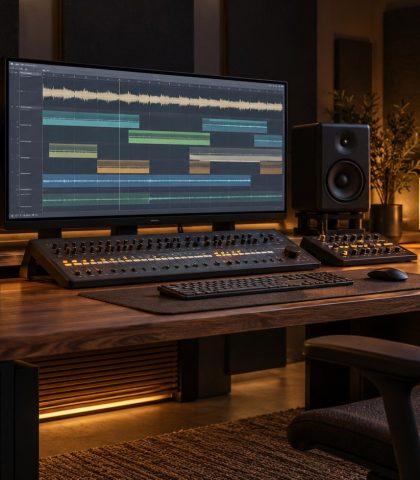
What sits behind the microphone matters just as much. The Avalon VT-737 is a classic channel strip that combines a preamp, compressor, and equalizer in one rack unit. Its tube-based warmth can add a subtle richness to a voice without making it sound artificially colored. Many engineers leave the compressor set to a gentle ratio and let the preamp do the heavy lifting. The result is a signal that hits the DAW already shaped, requiring less processing later.
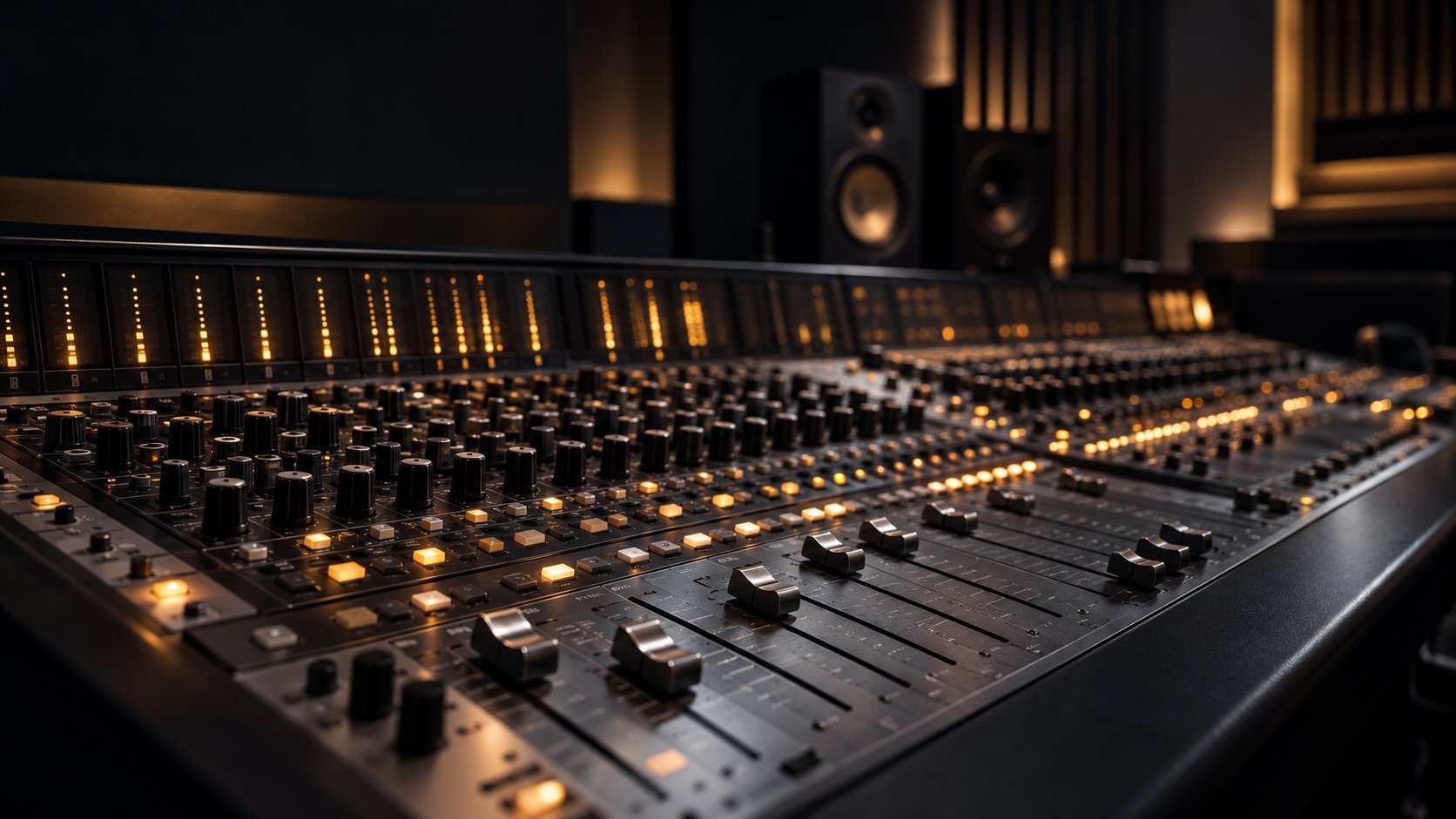
Monitoring is another area where cheaping out hurts. Genelec monitors are a common sight in professional rooms because they are accurate and consistent. If you cannot trust what you hear, you cannot make good decisions about levels, EQ, or compression. Even with great monitors, most voiceover sessions are tracked with headphones to avoid bleed. The choice of headphones matters too, but the monitoring chain should be transparent enough that you hear exactly what the microphone hears.
Workflow and the Digital Side
Once the signal is in the box, the DAW becomes the center of the operation. Avid Pro Tools is the industry standard for a reason. Its editing tools, automation, and session management are built for the kind of detailed work that voiceover and ADR demand. When a line needs to be punched in, when a breath needs to be trimmed, or when a pop needs to be removed, Pro Tools makes it fast and precise.
Noise reduction is another critical skill. Even in a well-treated room, there will be moments when a plane passes overhead or a piece of gear hums. iZotope RX is the go-to suite for cleaning up audio without destroying the performance. Its spectral editing tools let you see and remove specific frequencies, like a rumble or a buzz, without affecting the voice. Learning to use RX well takes time, but it can save a track that otherwise would need a retake.
Sync matters too, especially for film and TV work. SMPTE timecode is used to lock audio to picture, ensuring that every line lands exactly where it should. When a voice actor records ADR, they watch the original performance and try to match the timing and emotion. The engineer manages the session, punching in and out, while the talent watches the screen. It is a collaboration that requires trust and clear communication.
Remote recording has become more common, and tools like Source-Connect allow talent to record from their own spaces while the engineer controls the session remotely. The quality depends entirely on the talent's setup, which is why some producers still prefer to bring actors into a proper room. A voiceover recording studio offers consistency that a home booth cannot always match.
The People Behind the Glass
The gear matters, but the people matter more. A good engineer knows how to draw a performance out of a talent without breaking their focus. A boom operator handles microphone placement on location, but in a studio the engineer often acts as both operator and producer. They listen for mouth noises, sibilance, and pops, and they know when to stop a take and when to let it run.
The talent themselves often belong to a voice actor union, which sets standards for rates, working conditions, and session lengths. Understanding those rules is part of the job. A session that runs overtime can mean overtime pay, so efficient workflow matters. A Foley artist works in a similar world, creating sound effects that match the picture, but the voiceover world is about capturing a performance, not creating one from scratch.
Some of the best people in this field are the ones who have been doing it for decades. An Oscar-winning sound designer might walk into a voiceover recording studio to lay down a narration track, and they know exactly what they need. They will ask for a specific microphone, a certain preamp, and they will listen to the room before they say a word. Watching someone like that work is a masterclass in efficiency and taste.
Practical Considerations for Booking
If you are booking a session, here are a few things to ask about:
- What microphones and preamps are available? A Neumann U 87 and Avalon VT-737 are a good sign.
- Is the room treated for voiceover specifically, or is it a general-purpose studio? The difference matters.
- Does the engineer have experience with ADR and M&E mixes? Those skills are not universal.
- What is the noise floor like? If you can hear the HVAC or traffic, the room is not ready for critical work.
- Can they handle remote sessions via Source-Connect if needed?
A good studio will be happy to answer these questions. A great one will have answers ready before you ask.
Final Thoughts
Choosing the right voiceover recording studio comes down to trust. Trust that the room is quiet, the gear is maintained, and the engineer understands the craft. It is a business built on details, on the difference between a take that works and a take that soars. The best sessions feel effortless because everyone involved has done the hard work beforehand.
Whether you are a voice actor looking for a reliable space, a producer booking a narration track, or a sound designer laying down a trailer, the room you choose will shape the result. Take the time to find one that treats every session with the same care an Oscar-winning sound designer would expect. That respect for the work is what separates a good recording from a great one.